



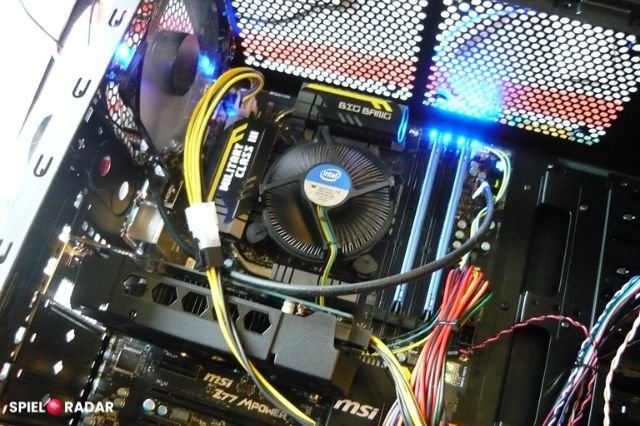
Every part of the computers we use every single day works together like a small, silent team — and most of us never stop to think about what’s actually happening inside that metal or plastic box on our desk. Whether you’re a student building your first budget PC, a gamer upgrading your rig, or just someone curious about what makes their laptop tick, understanding each part of the computers you own can save you money, help you troubleshoot problems, and make you a smarter buyer. In this guide, we’ll break down every major part of the computers in plain, simple language — no confusing jargon, no unnecessary complexity.
- Why Understanding Every Part of the Computers Matters
- 1. The CPU (Central Processing Unit)
- 2. The Motherboard
- 3. RAM (Random Access Memory)
- 4. Storage: HDD vs SSD
- 5. The GPU (Graphics Processing Unit)
- 6. The Power Supply Unit (PSU)
- 7. The Case (Chassis)
- 8. Cooling System
- 9. Input and Output Devices
- 10. The Operating System
- How These Parts Work Together
- Building vs Buying: Which Is Right for You?
- Common Mistakes Beginners Make
- Frequently Asked Questions (FAQ)
- Conclusion
Why Understanding Every Part of the Computers Matters
You don’t need to be an engineer to understand your machine. But knowing the basics helps in a few real, practical ways:
- You can build or upgrade your own PC instead of paying someone else to do it
- You’ll know exactly what to look for when buying a new computer
- Troubleshooting becomes way less stressful when you know what each component actually does
- You’ll stop feeling lost when a tech-savvy friend starts talking about “RAM” or “GPU”
Let’s go through each part of the computers one by one, starting with the brain of the whole operation.
1. The CPU (Central Processing Unit)
Think of the CPU as the brain of your computer. Every calculation, every click, every command you give your machine gets processed here first. The CPU executes billions of instructions per second, and its speed (measured in GHz) plus the number of cores it has directly affects how fast your computer feels.
Popular CPU brands include Intel and AMD. For everyday browsing and office work, a mid-range CPU is more than enough. For gaming or video editing, you’ll want something with more cores and higher clock speeds.
2. The Motherboard
If the CPU is the brain, the motherboard is the nervous system. It’s the large circuit board that connects every other part of the computers together — the CPU, RAM, storage, graphics card, and more all plug directly into it. The motherboard determines what kind of CPU you can use, how many RAM slots you have, and what expansion options are available down the line.
3. RAM (Random Access Memory)
RAM is your computer’s short-term memory. When you open a program, it gets loaded into RAM so the CPU can access it instantly. The more RAM you have, the more programs and browser tabs you can run smoothly at the same time without everything slowing to a crawl.
For most users, 8GB is a comfortable minimum in 2026, while 16GB is recommended for gaming, and 32GB or more is ideal for heavy multitasking, video editing, or 3D rendering work.
4. Storage: HDD vs SSD
This is where all your files, programs, photos, and your operating system live permanently — even after you turn the computer off. There are two main types:
- HDD (Hard Disk Drive): Older technology, uses spinning disks, cheaper per gigabyte, but noticeably slower
- SSD (Solid State Drive): No moving parts, dramatically faster boot and load times, more reliable, though slightly more expensive per gigabyte
Most modern builds use an SSD for the operating system and frequently used programs, sometimes paired with a larger HDD for bulk storage like movies or backups.
5. The GPU (Graphics Processing Unit)
The GPU handles anything visual — from rendering your desktop to running the latest AAA games at high resolutions. Every computer has some form of graphics processing, but there’s a big difference between integrated graphics (built into the CPU) and a dedicated graphics card.
If you’re gaming, doing 3D modeling, or video editing, a dedicated GPU is essential. For basic browsing and office tasks, integrated graphics are usually enough.
6. The Power Supply Unit (PSU)
The PSU converts electricity from your wall outlet into the specific power that each part of the computers actually needs to function safely. A weak or unreliable PSU can cause random shutdowns, instability, or even damage to other components over time. It’s one of the most overlooked parts of a build, but it deserves serious attention — never cheap out here.
7. The Case (Chassis)
The case is the physical shell that houses every part of the computers we’ve talked about so far. Beyond just looks, a good case affects airflow, cooling, cable management, and how easy it is to upgrade components later. Cases come in different sizes: Mini-ITX, Micro-ATX, and full ATX being the most common.
8. Cooling System
Every part of the computers generates heat while working, especially the CPU and GPU under heavy load. Cooling systems — whether air coolers with fans or liquid cooling loops — keep temperatures in check, prevent thermal throttling, and extend the lifespan of your components.
9. Input and Output Devices
These are the parts you actually interact with directly:
- Input devices: Keyboard, mouse, microphone, webcam
- Output devices: Monitor, speakers, printer
While technically external, these peripherals are just as much a part of the computers experience as anything inside the case.
10. The Operating System
This isn’t physical hardware, but it deserves a mention because it’s what ties every part of the computers together into something usable. Windows, macOS, and Linux are the three major operating systems, each managing how software communicates with your hardware.
How These Parts Work Together
Here’s a simplified way to understand the relationship between every part of the computers:
- You press a key or click your mouse (input)
- The CPU processes that command
- RAM temporarily stores the data being worked on
- The GPU renders anything visual that needs to be displayed
- Storage saves any permanent changes or files
- The motherboard keeps all of this communication flowing smoothly
- The PSU powers everything, while the cooling system keeps it all running safely
- Finally, the monitor (output) shows you the result
It’s a constant, lightning-fast cycle happening thousands of times per second.
Building vs Buying: Which Is Right for You?
One question that comes up a lot once people start learning about every part of the computers is whether they should build their own PC or simply buy one pre-assembled. Both approaches have real advantages depending on your goals, budget, and comfort level with hardware.
Building your own PC gives you full control over every single component, often at a lower price than an equivalent pre-built machine. It also means you understand exactly what’s inside your case, which makes future upgrades and troubleshooting much easier. The trade-off is time — researching compatible parts and physically assembling everything takes patience, especially for a first build.
Buying a pre-built PC is faster and usually comes with a warranty covering the whole system. However, manufacturers sometimes cut costs on less visible components like the PSU or cooling system to keep prices competitive, so it’s worth checking detailed specs before buying rather than just looking at the CPU and GPU listed on the box.
Whichever route you choose, the same underlying knowledge applies — knowing what each part of the computers does will help you make a more informed decision either way.
Common Mistakes Beginners Make
When people first start learning about every part of the computers, a few common mistakes tend to pop up:
- Overspending on the GPU while underspending on the PSU — a weak power supply can bottleneck even the best graphics card
- Ignoring cooling — thermal throttling can quietly reduce performance without any obvious warning signs
- Buying more RAM than needed — while RAM is important, going from 16GB to 64GB rarely makes a noticeable difference for average users
- Forgetting about the motherboard’s compatibility — not every CPU fits every motherboard, so always double-check socket types before buying
Frequently Asked Questions (FAQ)
What is the most important part of the computers?
There isn’t one single “most important” part — every component depends on the others. That said, the CPU and motherboard are often considered the foundation, since they determine what other parts are even compatible.
Can I upgrade just one part of the computers instead of buying a whole new machine?
Yes, absolutely. One of the biggest advantages of desktop PCs over laptops is that you can usually upgrade individual components like RAM, storage, or the GPU without replacing the entire system.
Do laptops have the same parts as desktop computers?
Laptops contain most of the same core components — CPU, RAM, storage, GPU — just in a smaller, more compact, and often non-upgradeable form factor.
How often should I clean the parts of the computers to prevent dust buildup?
For most users, cleaning the case, fans, and vents every 3 to 6 months helps maintain proper airflow and prevents overheating.
Conclusion
Understanding every part of the computers doesn’t require a degree in engineering — just a bit of curiosity and a willingness to learn the basics. Once you know what the CPU, RAM, storage, GPU, motherboard, and PSU actually do, building, upgrading, or simply troubleshooting your machine becomes far less intimidating. If you’re planning to build or finance your next gaming PC, check out our guide on Gaming PC Ratenzahlung Österreich for financing options and tips before you buy.
For a deeper technical breakdown of computer components, you can also check out this overview on Wikipedia.